ABP
Multi Styrene has been a dominant manufacturer in EPS
(expanded polystyrene) and EPP (expanded polypropylene)
manufacture since 1978.
ABP Building Products highlights the advantages and
cost effectiveness of EPS in the construction industry.
Green
Insulation at APEX
Energy Efficiency: productivity drive new commercial
building design
"Elements
such as radiant heat, evaporative air conditioning,
double glazing and wall, roof and floor insulation ensure
ideal ambient temprature."
ABP
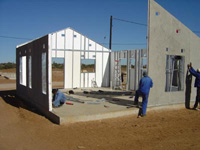
supplies the EPS components for 138 houses for the Botswana
Housing Coporation.
The
value of fully thermally insulated housing has been
understood by the BHC in Botswana. The housing system
is to a Canadian design and incorporates 90mm thick
EPS panels in a steel studding support system with magnesium
oxide boards on either side and a ‘stucco’
plaster completing the system on the outside. Houses
range in size from 50 - 68m². As well as this walling
system all the houses have ceiling systems and tight
sealing uPVC windows.
The
lead taken by the BHC in accepting thermal insulation
of housing in the harsh African climate is an example
for the South African housing authorities.
EPS
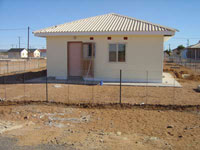
50m2 finished house in
Botswana
All
walls
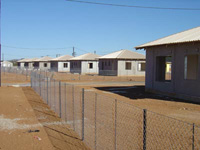
Exterior
veiw of development
Green
Housing in Memel OFS.
Northlands
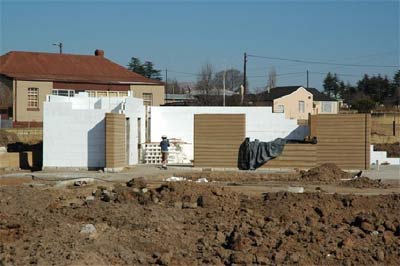
Projects are building a house in Memel that combines
materials to ensure building comfort and interior temperature
moderation all year with minimal energy consumption.
The north and east walls are being built with thick,
rammed earth – these walls absorb heat during
the day acting as a heat soak and then slowly release
this heat into the house at night. All other walls are
being built with Polyblock to ensure that the heat stays
inside the house during the cold winter months.
June
2008
ABP
are supplying a range of EPS products for housing in
the DRC including Polyblock, Polyplast, Variblock the
TASS system.
With
the growth in the mining sector there is a large demand
for housing and ABP’s products are gaining a foothold
in this market as they are quick and easy to build with
and also protect against the harsh climate in the region.
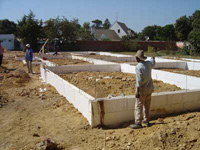
The
first Polyblock house built in Lumbumbashi
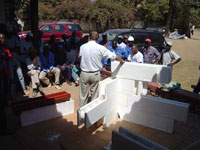
Training
builders in Lumbumbashi, part of the process to
ensure the ABP systems are being correctly used
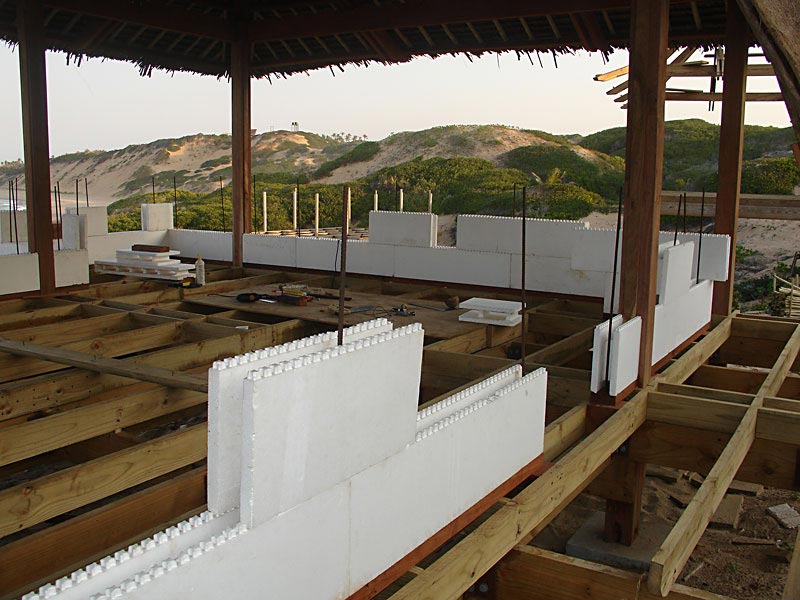
Mozambique
Lodge uses Polyblock to fully insulate each side of
chalets.
A
unique combination of timber frame construction with
Polyblock insert wall panels and thatched roof was used
to construct a series of fully insulated chalets in
Mozambique. The Polyblock panels were secured to the
timber frame by steel Y8 bars secured into the timber
and timber ‘studs’ the width of the Polyblock
hollow linking the Polyblocks to the building frame.
The combination of thatched roof and Polyblock walls
will ensure that these lodges are comfortable to live
in particularly in the hot summer months.
Starter
First
Row
February
2008
VARIBLOCK
ABP have introduced a revolutionary new retaining wall
system VARIBLOCK, which is an expanded polystyrene formwork
systems which has significant application and closet
advantages over using either brick skins or metal formawork.
Click
on image to see enlarged view
February
2008
COBLIT A
unique, decorative, exterior wall moulding product range,
COBLIT, has been launched by ABP. COBLIT is an expanded
polystyrene moulding system that can be precut to any
shape or size and is coated in factory with a uniform
2-3mm thick resin based plaster system.
The COBLIT system comprises of the preplastered mouldings,
two pack adhesive and filler paste. The mouldings are
glued to the wall with the quickset adhesive and can
be painted with any type of exterior paint.
COBLIT
advantages include: speed and accuracy with which the
mouldings can be fitted, low labour requirement, close
dimensional accuracy and durability.
February
2008
Two
new TASS Licensees appointed
ABP
have appointed Duvhula Construction and PRO.Com cc as
TASS lincesees.
Duvhula
operate in the greater Gauteng region and Pro.Com have
operations in Bloemfontein and Nelspruit.
October
2007
ABPPOLYBLOCK RECEIVES
AGREMENT CERTIFICATION.
The
ABPPolyblock building system has been certificated by
the Agrement Board of South Africa.
Agrement is responsible for assessing innovative building
systems, ratifying that they comply to the South African
building codes of practice and standards and monitoring
their use in the local construction industry to ensure
the systems are correctly used.
For consumers looking to use these innovative systems,
Agrement certification provides peace of mind and facilitates
municipal and bank approval of building plans.
TUFS,
ABP Building Products under floor and in wall, thermally
insulating system used in House Botha Nottingham Road
KZN
TUFs
is a cost effective way of simply insulating under ground
floor slabs and in brick walls to create a highly effective
thermal barrier to increase home comfort by moderating
internal home temperatures and reduce the ongoing energy
costs associated with heating and cooling.
The
use of expanded polystyrene to insulate this home under
floor, in wall and in ceiling was approximately 0,02%
of the total cost of building this house.
The
design of TUFS into a normal ground floor slab to thermally
insulate this area and prevent the ground under the
house from being a heat soak for temperature generated
in the house is approximately 12-15% cheaper than a
traditional concrete ground floor slab with the added
benefits of home comfort and reduced energy expenditure
on heating and cooling.
Where
under floor heating is to be installed TUFS significantly
increases the effectiveness of these systems by ensuring
the heat generated goes into the living space and not
into the ground. This effectively means that under floor
heating system can be used for a couple of hours a night
rather than the full night cycle with the same heating
results.
With
the rising costs of energy TUFS should be installed
in every new house or commercial building built as a
matter of course.
Images
may take a 30 seconds to load
Monaghan
Eco Development, Cradle of Mankind, Gauteng.
The
roof slab for this building, which is the hub of an
Eco development project at the Cradle of Mankind was
built using the lightweight, insulated TASS floor slab
system. TASS had 3 key properties around its specification;
lightweight which allowed an area with minimal column
interference, thermal insulation to moderate the temperature
of the entertainment area underneath and falling within
the realm of an eco friendly product which was core
to the values of this development. The engineering design
was done by TASS licensee, MRH Consulting Engineers,
and the design features included using an I beam internal
to the TASS slab to allow large cantilever spans as
well as an edge I beam to act both structurally and
as edge formwork. The architect for the project was
Enrico Daffonchio and Associates.




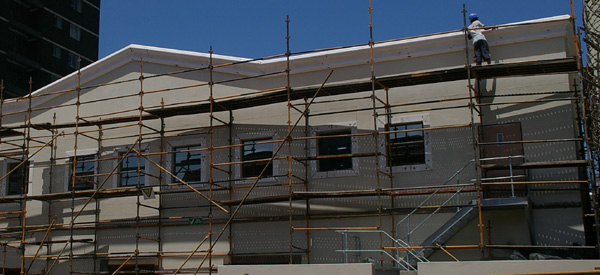
 The
ABPPolyblock building system has been certificated by
the Agrement Board of South Africa.
The
ABPPolyblock building system has been certificated by
the Agrement Board of South Africa.